Sewage sludge recovery

Sludge is a process stream.

Not merely waste, but a stream with potential to recover energy and resources. The first task is to cut the water that is treated, hauled and paid for. From there, every step gives something back.

The approach

We compare the route, not the machine.

No single technology is best for every plant. The right answer depends on volume, composition, available heat, space, logistics and cost.

  • Proper dewatering cuts the mass and the load on everything downstream
  • Drying turns wet sludge into a stable, manageable raw material
  • Thermal treatment reduces the residue and uses the energy it contains
  • Phosphorus is recovered as a valuable material with the right technology
We compare the route, not the machine.
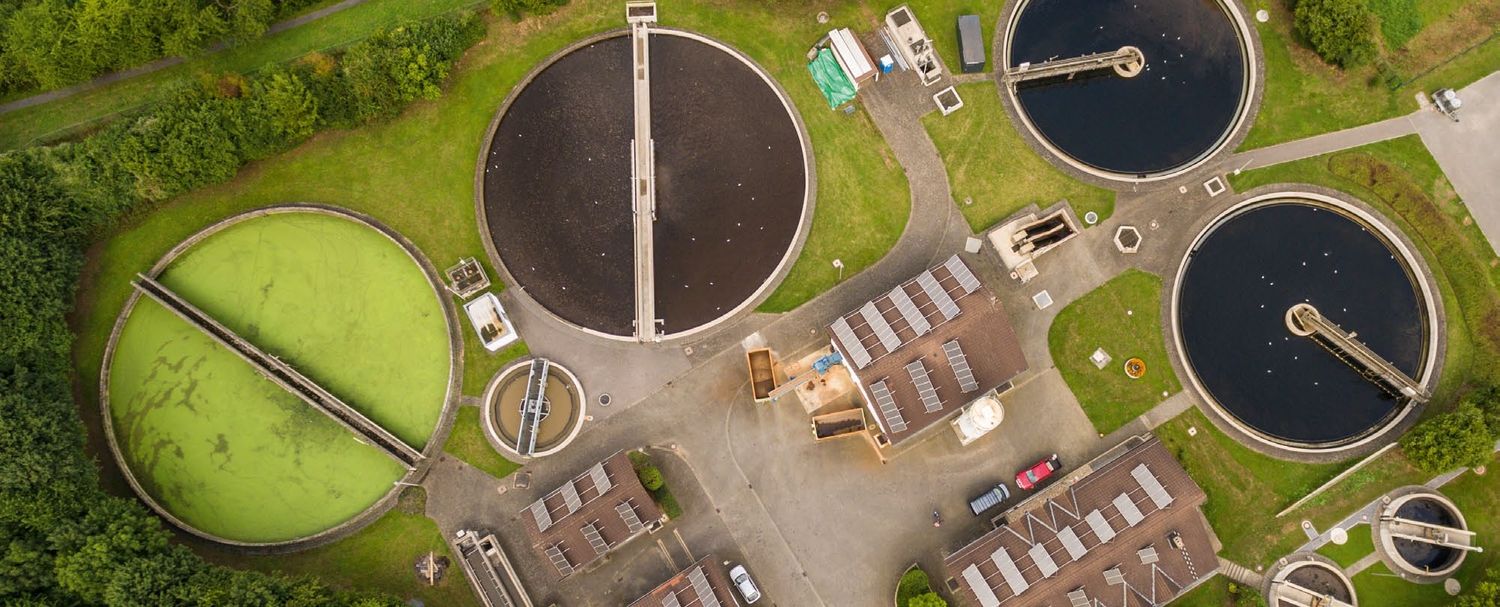
Source · Zweckverband Abwasserbeseitigung Linz-Unkel

Engineering services

What we do for the plant.

From the first survey to the input data for the investment decision. Every proposal starts from volumes, composition, equipment, space and cost.

Survey and data

  • Survey of the treatment plant
  • Collection and structuring of process data
  • Determination of daily and annual sludge flow
  • Analysis of moisture and dry solids
  • Analysis of the organic and mineral fractions
  • Assessment of centrifuges, filter presses and screw presses
  • Assessment of polymers and dosing systems
  • Analysis of the existing operating regime

Calculations and balances

  • Calculation of material flows
  • Preliminary energy balance
  • Analysis of electricity, staff, transport and disposal
  • Assessment of available space and infrastructure

Technology selection

  • Comparison of technology options
  • Choice between stationary, container and semi-mobile configuration
  • Preparation of a technical concept
  • Definition of main equipment and connecting systems
  • Input data for the techno-economic assessment
  • Input data for the business plan

Working with manufacturers

  • Technical correspondence in German
  • Discussions with the manufacturer's specialists
  • Preparation of technical questionnaires
  • Organisation of trials with pilot equipment
  • Analysis of trial results
  • Definition of the next practical steps

Technology directions

What we compare.

EKOTANK studies, compares and adapts the technologies of specialised European manufacturers to the specific site.

  • Sludge thickening
  • Dewatering with centrifuges
  • Belt and chamber filter presses
  • Screw presses
  • Polymer and dosing optimisation
  • Low-temperature belt drying
  • Use of waste heat
  • Carbonisation and mineralisation
  • Pyrolysis and gasification
  • Decentralised thermal recovery
  • Container and semi-mobile plants
  • Mono-incineration of sludge
  • Recovery of released heat
  • Wet flue gas cleaning
  • Removal of dust and fine particles
  • Removal of heavy metals and acidic compounds
  • Odour control
  • Hygienisation and pasteurisation
  • Treatment with quicklime
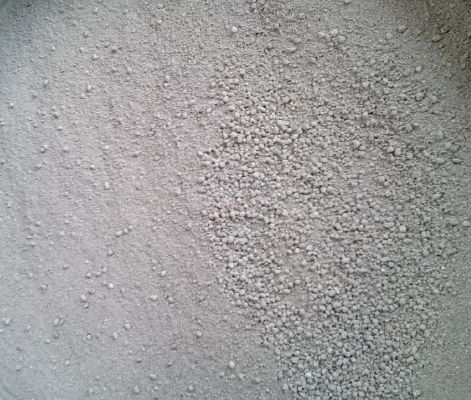
  • Stabilised granulate
  • Phosphorus recovery
  • Biomass and digestate
  • Automation and remote monitoring
  • Integrated material and energy cycle

Known from the inside

The European technologies.

Foreign technologies are treated as components of a solution adapted to Bulgarian conditions — not as a ready-made catalogue.

PYREG

Carbonisation and mineralisation of sludge with phosphorus recovery. We have familiarised ourselves with the technology first hand.

ELIQUO STULZ · EloDry

Technical discussions on dewatering, low-temperature drying and waste heat use, including a written assessment of the dewatering stage at Varna.

VEBAG · TopBio

Technical meeting and review of a container thermal configuration for small and medium plants.

TopBio-R

Studied solution for wet flue gas cleaning that returns the heat to the heating circuit.

ECOSystem

Studied modular solutions for hygienisation, pasteurisation and granulation of sludge and other organic waste.

PhosPRO

Studied microbiological route for phosphate recovery, fittable to an existing plant.

The European technologies.
Source · MRR Лайпциг

Main project

Varna WWTP.

Engineering study to improve dewatering and recover the sludge — using real data from the plant.

  • A flow of roughly 250 – 300 cubic metres of digested sludge per day
  • Around 15,000 – 18,000 tonnes of sludge per year after dewatering
  • Analysis of actual figures before and after dewatering
  • Assessment of the operating Alfa Laval centrifuge
  • Review of polymers, dosing rates and scope for optimisation
  • Evaluation of additional dewatering with a screw press
  • Organisation prepared for a press trial under real conditions
  • Comparison of drying, carbonisation, thermal treatment and phosphorus recovery
  • A complete configuration of the required equipment sought
  • Input data collected for the techno-economic assessment and business plan

Plovdiv WWTP

A preliminary technology study run in parallel with Varna. Scale considered: around 20,000 tonnes of sludge per year at roughly 20% dry solids. The next steps are analysis of quality, site and economic parameters.

Regulatory frame

The rules are read at the start.

Regulatory requirements are considered when the technology is chosen, not after the equipment has been ordered.

  • Sludge quality, contaminants and hygiene parameters are assessed
  • The intended use of the final material determines the permissible technology
  • Phosphorus, heat and the organic fraction are treated as resources
  • The solution must be workable, economically justified and permittable

The European move towards resource recovery is set out in Directive (EU) 2024/3019 on urban wastewater treatment. Numerical limit values are given only for a specific project and against the rules in force.

Common questions

Short and to the point.

If your question is not here, call us — we will answer directly.

Can an existing plant be improved?

Yes. We start by analysing the existing equipment and operating regime. The biggest gain often comes from there rather than from a new machine.

Is a new plant always necessary?

No. Sometimes the result is achieved through optimisation or staged modernisation.

Container or stationary?

The choice depends on capacity, space, logistics and permitting. That is why we compare all three configurations.

Can existing waste heat be used?

Yes, where the quantity and temperature level allow. It is one of the strongest savings in the whole chain.

What data is needed?

Volume, dry solids, material analysis, existing equipment, energy, space and current costs.

Do you organise trials?

Yes. For suitable projects, trials are arranged on site with the manufacturer's equipment and specialist.

Do you work with foreign manufacturers?

Yes. We run the technical correspondence in German and compare the applicable solutions.

Where do you work?

In Bulgaria, Germany and other European countries.

Struggling with sludge at your plant?

Let's discuss the task.